At the dawn of the new era, when the earth had not yet dried after the Flood, the coastlines had not settled, and whole seas of floodwater still stood in the mountain valleys, lyudichi and godkin lived with plenty of room and disliked being crowded. There was enough land and every kind of good thing for everyone after the Flood, so in those first centuries there were no wars. All multiplied and settled freely. They stayed wherever they liked the view from a knoll, forgot old legends in their new homes, and made few new ones, for there was little to make them about.
In the land of Pelazgia, on the banks of the Kamyshinka, in a picturesque spot with sturdy antediluvian houses, a valley of black earth, and rich woodland, the Nestrintsy settled. They took their name from their holy hero Nestro, who had saved them from the waters of the Flood on the Alaman summit of the Zimalayan Mountains. As often happened, godkin settled beside the lyudichi: the Olensky oratay family and their friend Drobogor, a beast-formed being. The lyudichi and godkin made a compact concerning food, protection, brides, and stonework, and lived well and peacefully, century upon century.
Meanwhile, news came ever more often from distant lands that worm-serpents had begun to emerge from the depths of the earth. They stole young men and women to feast upon themselves, or to carry down to the very bottom for their master, Mon the Hideous. Even among giants and the first oratai, few dared fight a large worm-serpent; fewer still could defeat the earthen reptiles. Unpunished, always well fed and satisfied in every sense, the worms bred and conquered Borea. They became barons of the lands they seized, building castles and deep burrows through which one could descend to the wormholes leading to Mon’s own lair. The worms had grown utterly unbridled, and there was no restraining them. The surrounding lands now gathered their sacrificial harvest of their own accord each year, sending the most precious, lovely, and youthful of their people to be enjoyed and eaten.
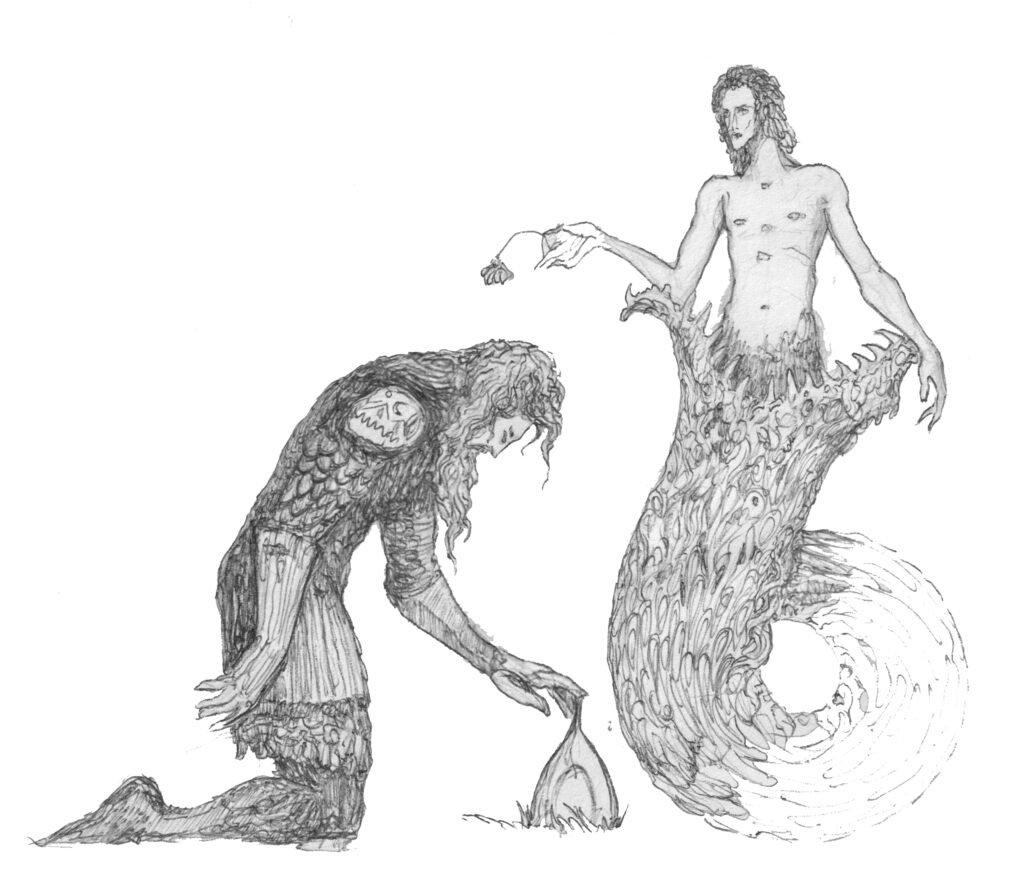
The Nestrintsy and Olenichi paid no heed to the fables of distant lands until, one day, a worm-serpent named Weeper settled nearby, across the Kamyshinka, in an abandoned antediluvian granary. On its roof he built a palace with a watchtower. Surveying the country from on high and sniffing the fresh evening air, he savoured the prospect of his coveted prey: the beautiful young men and women of the neighbouring villages. Among the scents of future delicacies, he suddenly caught one especially alluring fragrance. The youngest sisters in the oratay family were Raya and Maya, born joined at the torso and revered as holy turtledoves for their uncomplaining spirits and cheerful kindness. This unheard-of treat was precisely what the debauched Weeper wanted for himself, to the envy of his brother worm-serpents. At once he sent a fairly courteous letter inviting the sisters to visit him and promising not to hurt them if he received, in addition, a dozen young lyudichi of both sexes. Worm-serpents sometimes even fell in love with certain victims, lived with them for a long time, and treated them well. But eventually they could bear it no longer and ate them all the same.
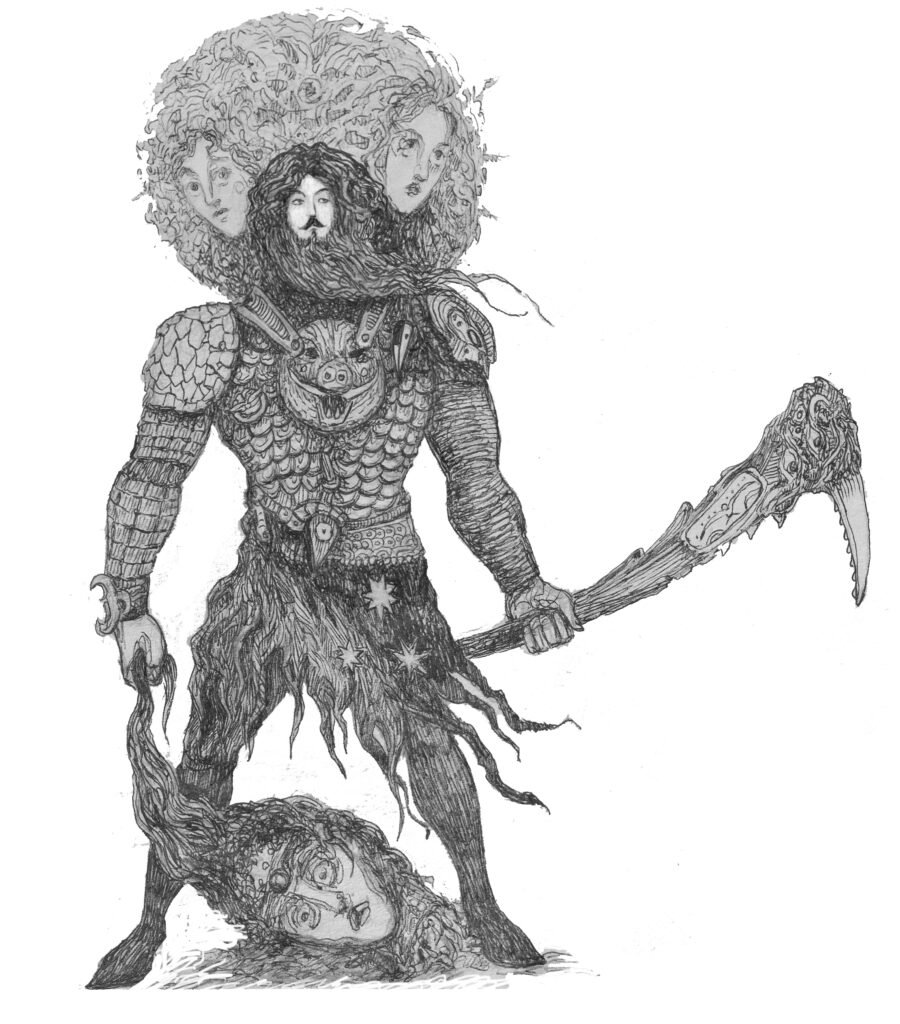
To refuse the worm-serpent meant death for lyudichi and godkin alike. No hero had yet been found who could overcome one, and they avenged resistance by torturing to death everyone involved and everyone uninvolved. Only Yan, the middle Olenich brother, decided that he could not live with such shame and such helplessness. In secret from the others, he asked his friend, a lyudich who worked as a smith, to help him. The smith was not afraid. He made Yan a copper-bound club studded with spikes of bog iron. Yan went to Weeper the worm-serpent and defeated him in a hard-fought battle. So grievously was Yan wounded, and so much worm-venom was in him, that everyone expected him to die soon. But his oratay heart overcame the poison. Yan recovered, gaining new strength and an insatiable thirst for hunting worm-serpents. The other serpent barons, meanwhile, hearing of their brother Weeper’s death, began to gather an army to take revenge and destroy the line of the Olenichi and the Nestrintsy people.
Thus began the first Maravar War. Those oratai who dared rise against the serpents, grew to love hunting them, and could withstand their venom came to be called maravars—which, in a half-forgotten antediluvian tongue, means ‘serpent-slayers’.