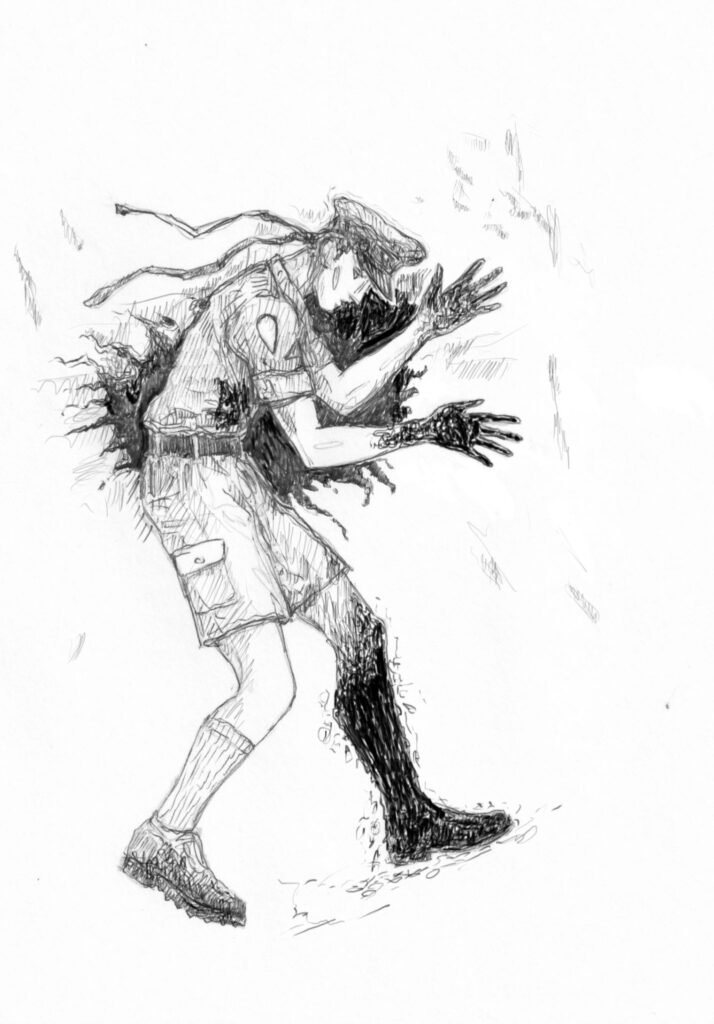
Back then, seven years earlier, Pulev was not yet so fat, but he was already so rosy, smooth, and tightly padded about the flanks that it seemed half a box of éclairs would be enough for the fat man lurking inside to burst through the taut covering of ripe plumpness and emerge in all his natural breadth. Pulev served as an assistant constable and was known as a good-natured fellow, a carouser, and a layabout. He wore his uniform shirt open over a pink chest adorned with a sham gold chain, cocked his cap so far behind one ear that it was impossible to see what kept it on, and always had pointed shoes that shone like sabres.
Out of respect for the sleeping kingdom, Pulev told Lefty in a half-whisper that his mother had been looking everywhere for him and he was to take him home. Annoyed with his anxious parent, and afraid his accidental meeting with Rita might fall through, Lefty had no choice but to obey. He stood up, brushing the sand from his shorts.
‘Psst,’ Yagr hissed. He rose carefully, slipped a blanket beneath sleeping Leya’s head, and said he would ride with them as far as the Fork, then go down to the pier for lunch with the grannies. Hunger had got the better of him, he said; he had no strength left. The three of them quietly made their way towards the cliff.
Pulev drove a tiny, humpbacked Zapryadva with a blue police stripe and a shrieking beacon. Behind the rear door was a compartment for prisoners, so small that it could barely have accommodated two naughty boys, a small bicycle, or a window thief with his knees tucked up. Larger criminals were offered the passenger seat. In practice, however, all the crime in Bella amounted to two friends of Pulev’s who got noisy when drunk. Sometimes, after overdoing things in a bar, Pulev would receive a complaint about himself. Then he would sternly bundle his friends into the Zapryadva, and the three of them would drive to the constabulary to sleep it off.
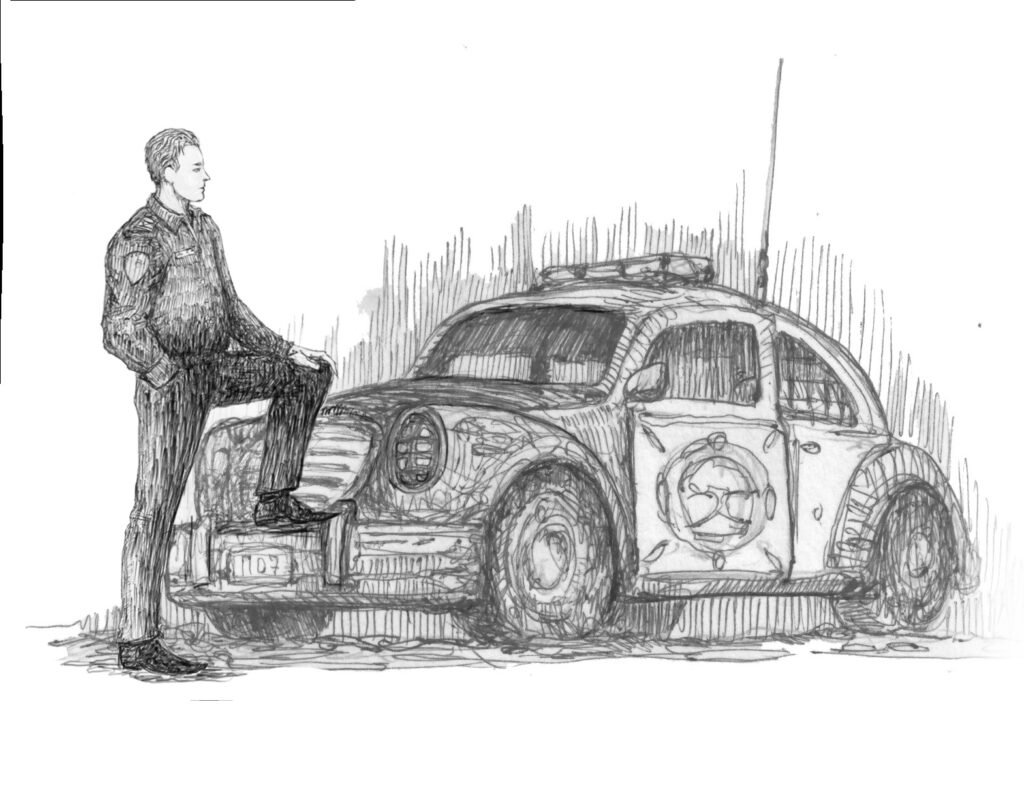
Pulev at the wheel, Lefty in the passenger seat, the bicycle in the boot, and Yagr on the rear footboard—so that the back bumper clanged against the tarmac and the front wheels almost lifted off the road. An enormous palm thundered on the tin hump. Off we go! Pulev dreamed of finishing off this four-wheeled disgrace as soon as possible so that he might finally be given a decent car, and so he mercilessly wound up the engine, crunched it into gear, and kicked the squeaking pedals. The unfortunate jalopy squealed like a beetle with a cold, coughed blue smoke, blew its rubber nose, and jerked away.
They flew through the fir grove, cool as water, struck a sheaf of sparks from the humpbacked bridge with the bumper, and burst out into the meadow sunshine, beside a flax field flowering with sky. At the Fork, Pulev braked, Yagr jumped down, and the humpbacked motor of law and order, almost airborne with relief, buzzed on towards Guernica.
Yagr remained at the crossroads. A few paces away, on the edge of the grove, rose the massive stone of an oratai pillar. He went over, swept the sign across himself, rummaged in his pockets, and laid a handful of barberry sweets on the step for offerings. There were only a few blackened biscuits, a faceted glass bearing the pink trace of dried wine, and a candle that had hung its burnt head on its neck of wax.
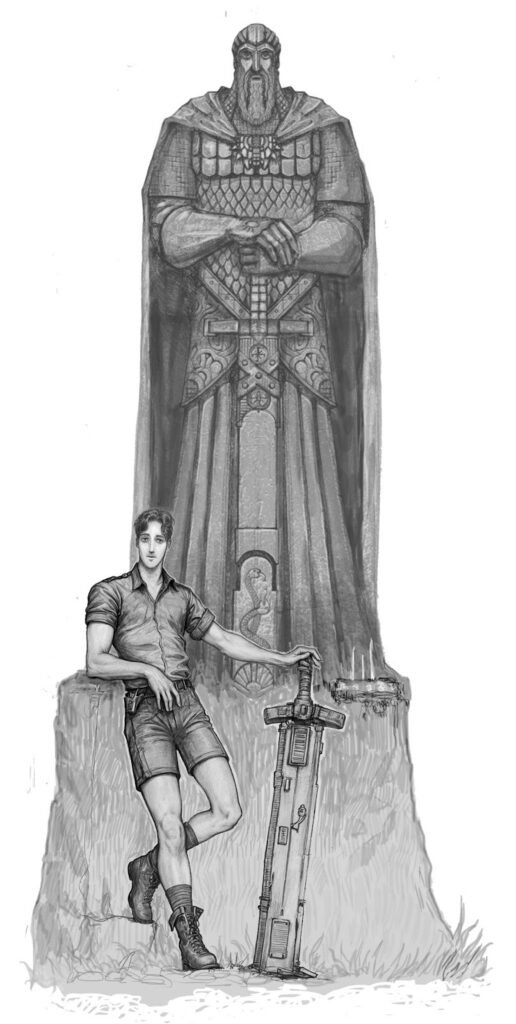
Yagr realised with annoyance that he had given his ancestor all the sweets. Glancing sideways, he took one back from the altar, recited Rhea’s short fifth hymn, crunched the sweet, let its sticky wrapper go on the wind, and strode off along the rattling gravel road towards the pier.
On his left, in a broad clearing with its back to the woods, stood the Sotnik family’s manor, red as a tram. For some three hundred years they had harvested ant honey on these lands. At the forest’s edge, towering anthills with honey boxes could be seen, spreading their sour fragrance over the whole district. It sharpened his appetite still further, and Yagr quickened his pace.
A powerful engine roared, and a green open-topped Pilgrim shot out of Garvatov Wood. It slowed and drew to a halt beside Yagr. A shot boar was tied across the bonnet, its pale belly uppermost. Blood still ran from its tusked snout and fried on the radiator grille. Three oratai sat in the giant car’s spacious interior. Mammoth-Noah was at the wheel; beside him sat his cousin Var-Gurevich.
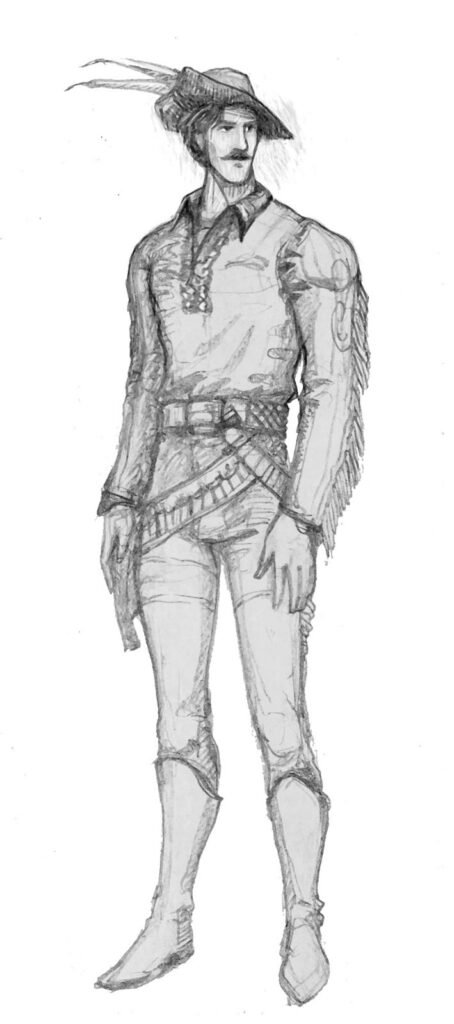
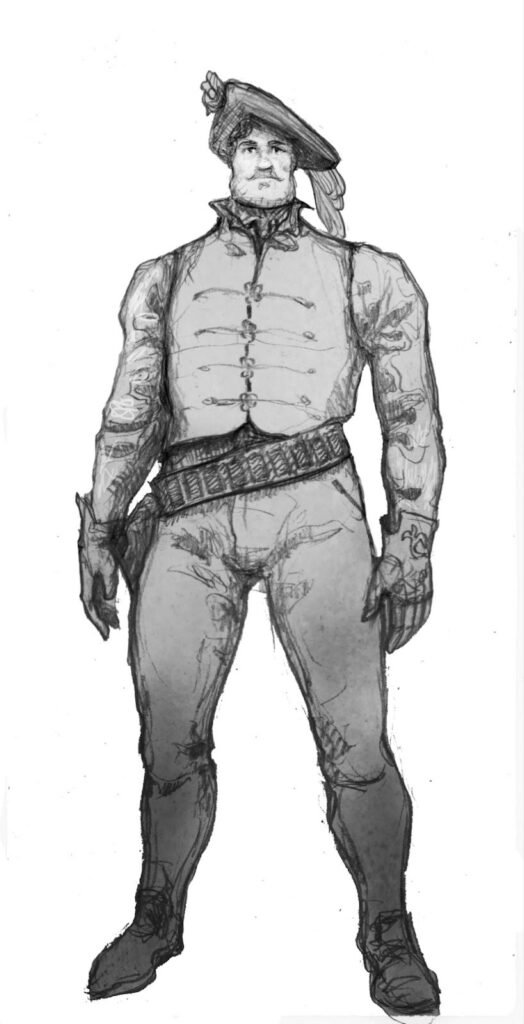
Both mighty fellows, in suede hunting jackets and tricorne hats with falcon feathers, belonged to the House of Yelenich. They served in the Stavrian assault regiment, were the same age, had graduated from the oratai military school in Ponurt, and had received their captaincies that spring. In winter they marched with the regiment against steppe tsars or served at outposts on the northern tributaries. In summer they lived at Yelenich Berka beneath Sail Mountain, not far from their ancestral estate. Since childhood they had been Yagr’s older companions at the Drabogor outpost, taking him hunting and fishing, and to the Guards’ all-round contests in Stokov. They had brought him up in the venerable oratai spirit, with a respect for strength, gluttony, large calibres, powerful engines, mighty breeds, and uniforms of good broadcloth.
Over the past year, however, Yagr had outgrown even Mammoth-Noah by half a head, while the desirable Polina had ripened from a merely pretty girl into the Swan Princess of the enchanted-island tale. She loved only her blue-eyed giant Yagr and had no eyes for anyone else, so the brothers had grown a little bitter towards their younger companion. Besides, lately there had been ugly rumours about Yavros. Hardly surprising: that strange house, that damned tower which sometimes rang and flashed its windows so violently that the lights flickered throughout the neighbourhood. And inside, a strange machine belonging to some flower.
Added to this were rumours about the clinic, and the unfortunate veterans of the southern war who were either being treated or languishing there; about gloomy-looking Lyutovik and his peculiar tricks; and about his crackpot guests, Princess Lisovskaya and Doctor Kazimirov. People also whispered of their connection with the inside-out monster that had killed people in the neighbourhood several years earlier. Despite all this, the brothers did occasionally visit Yavros—but only to admire beautiful Leya.
Squinting in the Sun and drumming his well-kept fingers on the steering wheel, Mammoth-Noah asked where Yagr was off to in his little cadet shorts; whether his mad brother had gone any madder; and whether beautiful Polina was not bored in their madhouse without the company of bers desirable in every respect. Yagr replied that he was on his way to the pier for lunch with the grannies. There he intended to order a whole Sunday kid, two helpings of goose, a loaf, a small pot of cabbage with morels, a tray of fish pie, a little kvass—as much as they had—and, for dessert, three platefuls of ice-cream scoops.
Mammoth-Noah gave a grunt. At the March festivities, Yagr had beaten him in the eating contest: he had disposed of a whole piglet, with a large platter of roast potatoes besides, half a minute faster. Noah had taken the defeat badly. Good-natured Mammoth-Roy chuckled, nudged his brother, and winked at Yagr, while Var-Gurevich, sprawled in the back, looked on with his habitual smirk. Mammoth-Noah smiled, wished Yagr luck in not bursting, stepped on the accelerator, and left him in the dust.
Brushing himself down and spitting out fine grit, Yagr continued towards his cherished goal. How he longed for an oratai Pilgrim of his own! Not a hunting model like the Yelenich brothers’, but a road car, softly sprung, with cushioned bench seats and a bronze wanderer on the bonnet. He would drive Polina to Stavrossa, and on picnics, and out for no reason at all. As it was, she never got away from Yavros: like a cursed stepdaughter, she attended Lyutovik and his machine from morning till night.
Yagr left the road, crossed the overgrown avenue of the abandoned Kumanov estate, and went down to the long, narrow Cuckoo Beach. This way the journey to the bay was half as long, and the fallen poplars and fanciful, sea-polished driftwood were no obstacle to him. Tell me, cuckoo, how long have I left?
Ten minutes later, a little out of breath, Yagr reached the bay. On its far side, beside the pier, stood the lopsided little eatery dear to his heart, with its battered sign: Polynitsa. The eight-table establishment belonged to two delightful old sisters, Greta and Varvara. One ran the business and counted the money, the other washed and served, and both adored Yagr. Its permanent cook was Nestor, left lame by the southern war. This kindly little man with the soft, shapeless nose cooked food that was ugly but delicious; anyone who dared taste his dishes, which looked like zoo feed, left satisfied. And Yagr was the most grateful admirer of both his cooking and the establishment as a whole.
Here they knew how to feed a large man. Nestor’s particular gift, evidently acquired during the war, was for making the most delicious and abundant meals out of offal, sinews, hooves, and heads. Yagr could not have afforded to fill himself properly here on whole geese, chickens, or, still less, veal fillet: of those he ordered only a couple of portions for the taste. The greater part of his table was always occupied by a triple helping of innards steaming in the noonday light, fragrant split hooves boiled tender, crystalline gristle, roughly chopped tripe, and mother-of-pearl joints—all served in clouds of steam, with generous remnants of meat clinging to the marrowbones.
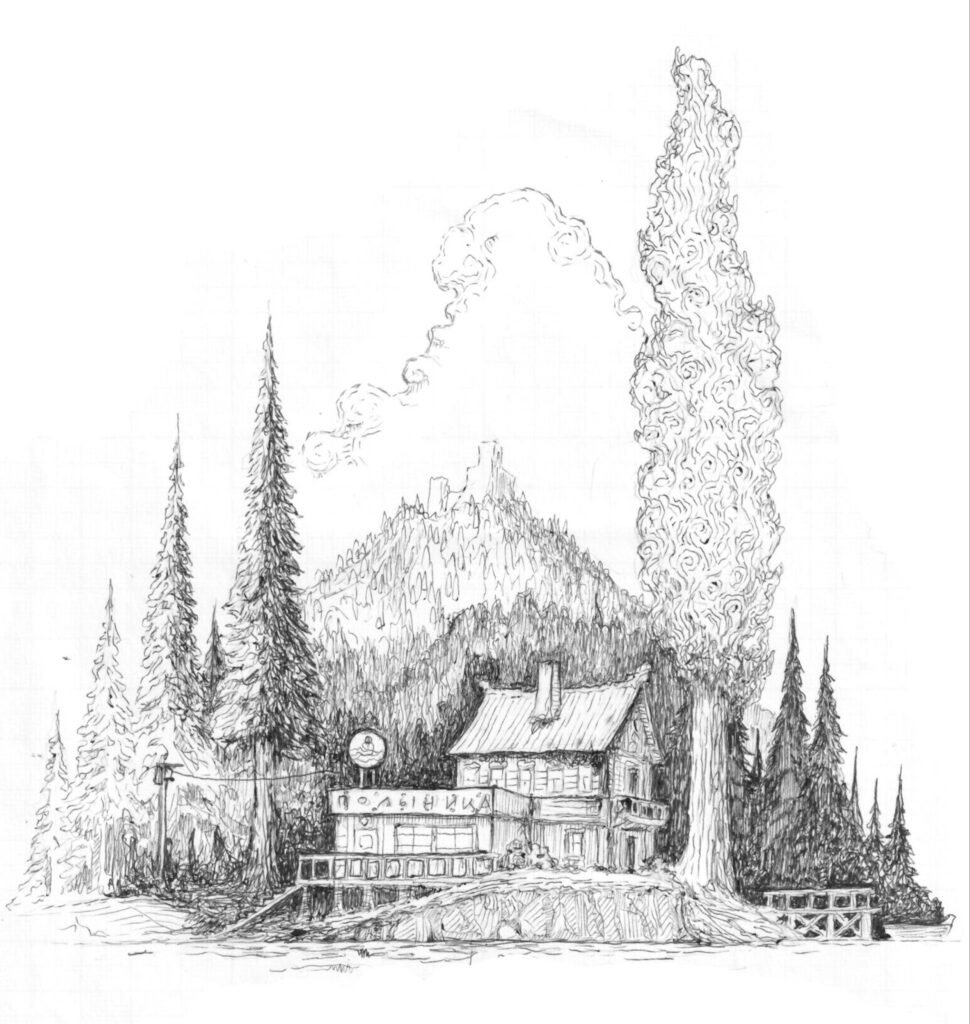
Usually the place was fairly empty; it was hardly on a busy thoroughfare. Only lorry drivers and travelling traders stopped here, along with fishermen or people returning from a trip on the sea. Sergeants from the Kurya Battery might also drop in. Yesterday, though, reinforcements of blue-shirts were supposed to have arrived to defend the fortress, just in case, and Yagr feared these idlers might descend on the grannies and eat the place bare. That was why he was hurrying to claim his seat early, rather than at two o’clock as usual.
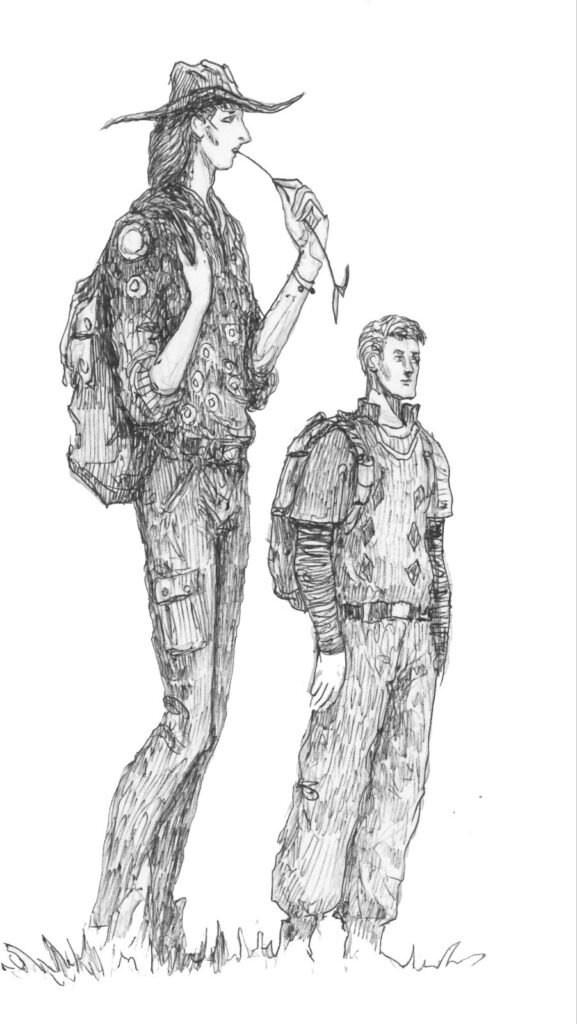
A group of tourists was leaving the café. Ten people, Yagr’s practised eye told him. At the oratai school he commanded a squad of cadets and could recognise ten without counting, as accurately as two or three. One of the tourists, wearing a broad-brimmed hat and a camouflage cape over a large rucksack, was extraordinarily tall—perhaps as tall as Yagr—but thin and stooped, and therefore plainly no oratai. ‘Or he was ill as a child,’ Yagr thought sympathetically, before returning to his appetising speculations about what Nestor might treat him to today, and what and how much he would order. More than anything, he wanted a little boar.
Before he knew it, Yagr was inside at his own table, in the far corner by a window whose broad sill was crowded with neglected flowers. On the wall above him, a bear’s head kept a thoughtful silence; beside it hung a double-barrelled shotgun and a dozen photographs of the tenor Kott, the only—and not particularly notable—celebrity ever to have dined here. Not a soul was on the pier. A few fishing boats and a little pleasure launch rocked serenely. A tobacco-company supplier’s van stood on the road, but the man himself was neither in it nor in the café. It was quiet, and there was no sound of the grannies.
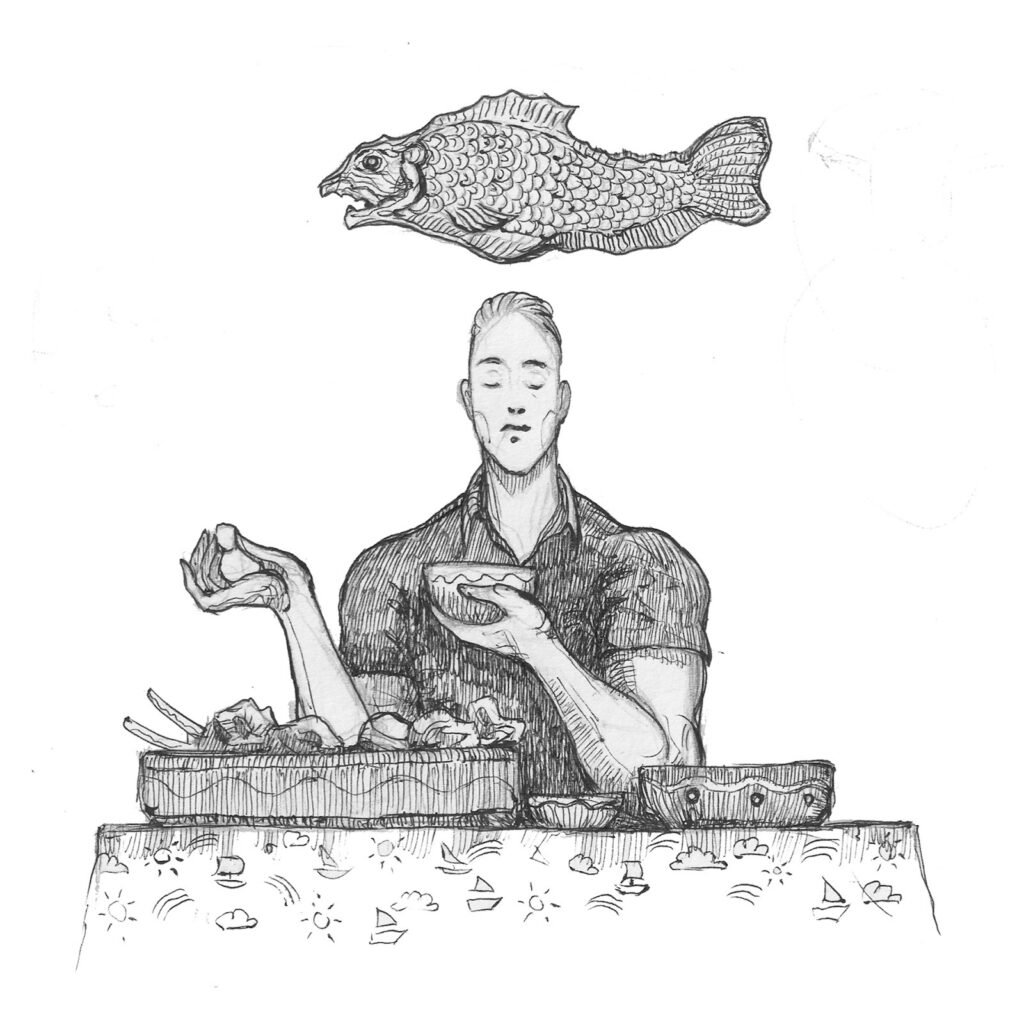
A splendid smell of frying meat, onions, garlic, and mutton fat came from the kitchen. A dim room with a broken ceiling fan; stuffiness; the much-handled curtain barely stirring in the fragrant draught from the kitchen. Everything was smoke-stained and covered in a thick patina of soot, tobacco tar, and grease. Sticky oilcloths with blackened, furry cuts, mug rings, and little ships upon the waves. The solitary buzz of a fly and the grumbling of the old beer fridge. On two neighbouring tables stood ten empty coffee cups and crumpled napkins.
Suddenly the front door swung. There came the click of a dog’s claws and a whiff of singed fur. After a few moments of silence, the café dog, Druzhok, entered the room: lazy, and fat as a piglet. Now his whole hindquarters were burnt, his fur still smoking; his naked tail hung like a charred twig, and one back leg dragged along the floor, bleeding. Druzhok looked dimly at Yagr, went to the kitchen, lay down with a yelp of pain, pushed his nose beneath the curtain, and began to whine mournfully.
Yagr’s forehead went cold. He rose quietly, approached the curtain, stopped, and listened. Not a damned thing could be heard over the hoarse howling. He drew the curtain aside and went in. The kitchen was veiled in steam; a great pot bubbled, choking on grey meat froth. That was wrong: broth ought barely to tremble. Meat and liver were burning in the pans. Oh, that was not good at all. An oil bottle lay overturned on the chopping table, still trailing a fine golden thread into a glossy puddle. From behind the table, a leg stuck out into the puddle: a foot with curled toes, wearing an old woman’s nylon stocking.
Yagr backed away across a floor as unsteady as a bog and stumbled over Druzhok. The dog screamed and snapped at his shin. Yagr started and stopped. This was a good, peaceful place. Nothing bad ought to happen here. He went back and looked behind the table. His old ladies lay in a heap with Nestor and someone else in tobacco-company overalls. All four were badly burnt above the waist: broad burns with black hearts, the kind left by the Solo’s silent thermite bullets.
An image drifted before Yagr’s eyes like a cloudy negative: ten tourists, the long man’s quick stride, ten coffee cups on the tables, crumpled napkins. Nestor had fought in the Medians. The suspicious old man had sensed something wrong about the visitors, and they had killed everyone. When Yagr saw the ten leaving the café, they had turned right, towards Yavros. He cried out and grimaced as though a tooth had been pulled. They were going to break the Flower Machine and kill everyone. Polina! Yagr tugged at his forelock, turned on the spot like a blind man, and began snatching things at random from the table: a ladle, an onion, a piece of meat, a knife. He rushed out of the kitchen, tearing down the curtain, rail and all. He ran to his table, threw away the knife, and wrenched the shotgun from the wall. The double-barrelled hunting gun looked like a toy in his hands; his finger barely fitted inside the trigger guard. He ran behind the counter, swept rubbish off the shelves, and found a packet of cartridges. Duck shot. Damn it. He loaded, stuffed the remaining cartridges into his pockets. Polina. The Solo had mingled with the sea-going sightseers, sailed here on that yacht over there, drunk coffee, killed everyone, and gone to Yavros.
Yagr ran outside and started after the Solo, but after a few strides he gave a roar and tore along the bay towards the short way over Cuckoo Beach. Be quiet, cuckoos. I don’t want to know. He ran with all his strength on legs ringing like bells, cursing himself for leaving Leya, for sitting so long like a fool at the grannies’ and picking at the oilcloth. Before his eyes flashed the silhouette of the long Solo descending the goat track to the beach. Polina. Thermite bullets. A burnt dog’s tail. Emptiness roared in his head, the hot light dulled his wits; he had no plan, only bewildered rage. He ran out into the avenue. Ahead, beyond the mass of untended trees, came shots—first one, then two, then volleys, then an explosion, the popping of grenades. What was that? Shouting and the gunfire of a battle ahead on the road. Yagr ran with all his might. A rise ahead, the road embankment: he could see nothing beyond it but a column of black smoke climbing upwards. Before the avenue ended, the firing began to die away. By the time Yagr reached the foot of the bank, everything was quiet except the grasshoppers and the ringing in his ears.
He climbed up beside the path, dropped beneath a dense bird-cherry bush, and peered out. An army lorry was blazing on the road; another lay on its side in a pool of spilled fuel. Someone behind the overturned vehicle was whimpering unbearably. Yagr rose and stepped cautiously onto the road. Dead marines lay everywhere—dozens of bodies ravaged by thermite, light blue shirts and dark blue shorts, as though a bunch of cornflowers had been trampled into the road.
Farther off, nearer the crossroads, lay two dead Solo. Yagr ran to them. One was curled in a puddle of a sickening scarlet. A couple of paces away, the other lay on his back with his chest shot through, his arms flung wide, gazing peacefully at an alien sky over sunglasses that had slipped down his nose. Carrion. Three more tourists lay on the verge: one torn apart by a grenade, two cut up by fragments. On the other side of the road, feet in foreign yellow boots stuck out of the bushes. In one minute of fighting, the ten Solo had slaughtered two platoons of marines. But they had lost six here. Now there were four left.
Yagr reached the fir thicket and plunged into its blue shade—the familiar scent of home and needles. His own road climbed steeply uphill. What are you doing to me? His giant body was suffocating from the run. Too fast; fire tore at his lungs. Mother’s Spirits, how little air there was. If only he could get there. Get there and find them all dead. A shot! Ahead! Another shot. Had they seen them? Were they fighting back? Kazimirov always carried a pistol. A foolish habit. What use was it? Run. Run! Quiet again. No more shots. Finished. They were catching everyone in the house like mice, killing them, burning them with silent thermite. He would get there and they would kill him too. Soon now. Air! Air!
The wood ended. The blazing hilltop; the familiar walls of Yavros, long unwhitewashed; grasshoppers sawing at his ears; the Yelenichs’ car outside the gates. They had come to visit beautiful Leya while Yagr was away, the sly admirers. Two bodies before the gates. Both Solo. He ran through, stumbled, fell—another Solo corpse, half its head blown away, teeth in a pink mush of gums. Only the long one left. Hide from him somewhere. The path to the house: branches covered in Eden’s petals thrust into his eyes, scratched him as though he were a stranger. A scream. From the tower. Polina. Not in my paradise, please. Gasping, he stumbled into the house; darkness after the light; the corridor, the tower, the Flower Machine. By the wall Var-Gurevich writhed in blood. Elsewhere a thermite rifle lay smoking foully. Beneath the window was Lisovskaya, either dead or unconscious.
Behind the batteries of the Flower Machine came scuffling and grunting. Shotgun ready, Yagr walked towards the sound on burning legs. Behind the battery bank, the heels of hunting boots knocked against the floor. The long man, like a praying mantis, sat astride Mammoth-Noah. He did not feel the hero’s futile resistance; he was strangling the giant. It was like a struggle between a wooden soldier and a teddy bear. The mantis squeezed the neck with concentration and relish. Noah was falling silent.
Now, in place of his rasping, there came a deep, choking breath from behind. The long man coiled, ready to spring away from the sights of the ridiculous gun. A shot thundered, and the fine pellets stripped the long head, leaving a piece of bleeding, eyeless meat moaning in surprise upon the narrow shoulders. But the mantis did not fall. He whipped out a pistol and searched for a target in the silent red room. Yagr seized the shotgun by its warm barrel, swung it back, and, putting all his disgusted mercy into the blow, struck the flayed head.
The walnut stock flew into splinters. The long man tipped smoothly onto his side but kept squirming across the floor like a dying snake. Breathing hoarsely, Mammoth-Noah crawled away from the mantis, felt beneath an armchair, and retrieved the pistol he had lost in the struggle: his hunting revolver. The long man was still breathing. Noah aimed at him. The cylinder clicked empty. ‘Wait, wait,’ Mammoth-Noah whispered, taking cartridges from his hunting waistcoat and beginning to load. Done. He took aim and emptied the full cylinder into the mantis’s head: five heavy bullets for boar and bear. Even these did not blow the head apart, as one might have expected. Each shot merely jerked it on its neck as though on a rope, as if there were a steel ball inside. Still, the lead was enough for the mantis, and he grew quiet.
Yagr sank onto his haunches, leaned against the wall, and stretched out his legs. His ears rang: revolver shots in a room with good acoustics were no joke. His throat burned as though he had drunk boiling salt water. ‘Polina!’ he shouted, and at once felt cool hands about his neck. He had not heard her approach. Hot wetness ran quickly down inside his collar. Polina was saying something through her tears, but the ringing in his ears kept him from making out a word.
Yagr had not yet caught his breath in Polina’s arms. Mammoth-Noah limped back and forth, feeling his neck. Kazimirov was dressing Var’s wound. Lisovskaya stood before the images of the triad in the holy corner, singing the psalm Deliverance and pouring from a bottle onto the coals in the bowls. They flared with golden fire, and she cried, ‘Your will! Your will!’ and drank greedily from the neck. Lyutovik approached the apparently dead Solo. A rucksack rose on his back like a hump. Lyutovik pulled its handle; the fastenings rasped, and it came away in his hand, an empty cover.
Beneath it was a grey box. Lyutovik tapped it lightly with the toe of his shoe: steel, by the sound. At the bottom were hinges and clasps. He fiddled with them and opened them, and at that the mantis began coming round, groping with his hands and gurgling plaintively. The lid opened. A liquid fragrant as ant honey splashed out at Lyutovik’s feet, and with it, amid wires and tubes, slipped something the size of a baby. Lyutovik cried out. It was a baby.
Next episode https://bezdezna.com/en/book/chapter-3-1/