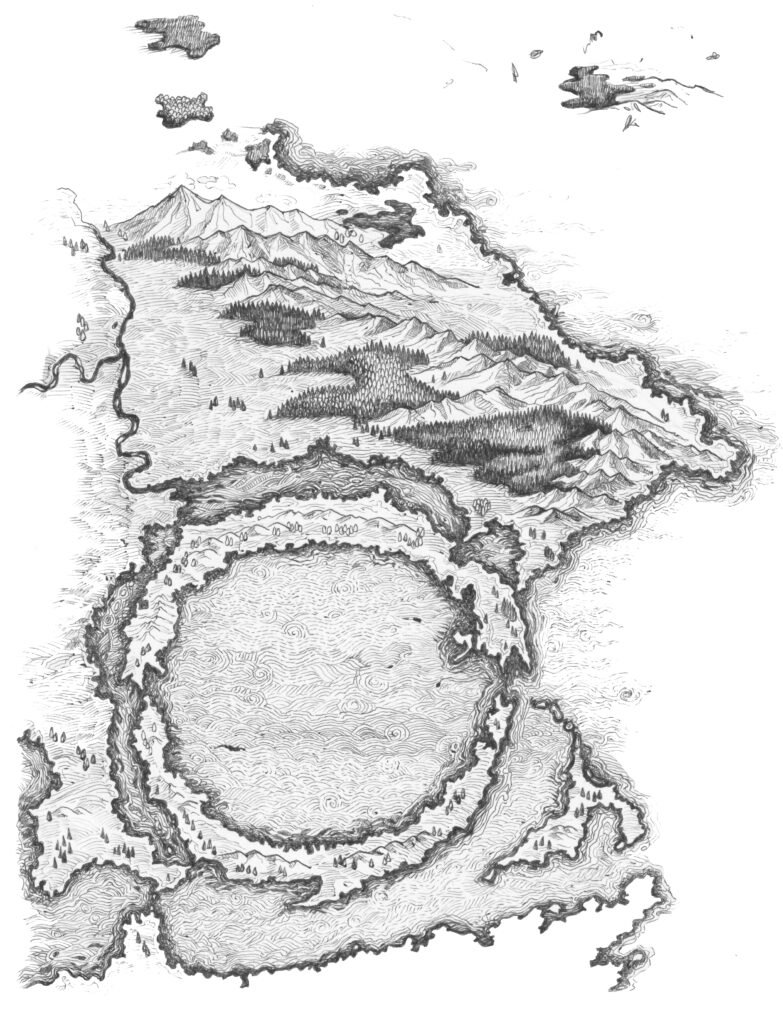
Klim XXVI, Tsar of Stavria, nicknamed the Wheel-Tsar, watched the beating, burning, and destruction of the swarm fleet from the deck of his own yacht as it fled towards Stavrossa. He had wanted to show his son, his only heir, the formidable glory of their Varvarossan might. Now he covered the boy’s tear-wet eyes with his palm, and between his fingers burned that bitter childish gaze upon the pantsardom’s shame and horror.
Several hours later, the tsar sat against the far wall of his palace’s Green Hall, looking wearily at the dense, motionless crowd of generals and marshals from the capital. They stood over maps as though over an operating table whose patient had just died, taking with him some secret of importance to them all. It was quiet. Only the smouldering of cigarettes could be heard, and the chorus of the commanders’ synchronised watches.
The fleet was lost. All six battleships, twenty-two destroyers, and forty-one support ships had perished. Only a few fast launches escaped into the shallows of the Children’s Sea. The rest of the fleet with its crews, the Tserrer Islands’ bastions with their garrisons, and uncounted sea-going sightseers were burnt and destroyed in a brief battle lasting twenty-seven minutes.
After the Rout, as the slaughter at the mouth of the Dunava came to be called, the Solo divided their forces. One of the five sarcophagi, with a portion of the smaller warships and transports, headed for Ponurt. There, without suffering any damage, the Solo burnt the coastal batteries, easily crushed scattered resistance, scorched several districts around the port clean, and began landing substantial forces of infantry, artillery, armoured vehicles, and supplies without hindrance.
The main body of the armada moved towards Stavrossa. The old capital’s ancient bastions were the sole obstacle before the open waters of the Dunava. Though, as had become clear, they were no obstacle at all to the Solo. The most modern and far more powerful fortifications and batteries had proved useless against the enemy yesterday. It turned out that Varvarossa simply had no means of harming the enemy sarcophagi. Which meant that in the morning the Solo would pass through the Narrow Throat and emerge onto the broad waters of the Dunava.
For Varvarossa the Dunava was more than a river. It was like an animal’s spine: its support, its blood, its nerves. All the empire’s chief and richest cities stood on its banks and tributaries. If—or rather, when—the armada reached the breadth of the main channel, it would advance upstream, burning every city in its path, breaking the seven great bridges, destroying Vasilissa.
Troops would have to be withdrawn from the Great Expanse, but then the steppe tsars and mountain queens would unite and strike from the west. The Expanse had been restless for the past two years already: a new leader had appeared. He had subdued the peoples of the northern tributaries and the Raven valleys, and captured the key fortress of Pobedim on the Pokoy tributary. The Great Expanse would overcome the abatis lines or break through the steppe ramparts; the invaders’ hordes would gain access to the undefended interior. What would save Varvarossa then? It would perish as its fleet had perished, only more slowly, and in greater agony.
The generals were silent. Half past six in the morning. After the Rout, the armada was moving slowly again, as though catching its breath. At that pace it would reach Stavrossa shortly after eight. Passing the towns of Malev and Muranga, the Solo had burnt them almost casually. There had not even been time to evacuate the inhabitants. Evidently thousands had died in those towns and in Ponurt.
News of the fleet’s loss and the destruction of three towns caused panic in Stavrossa. The inhabitants fled. Obeying bewildered orders, the army took up positions along the banks, in the eastern districts, and in the bastions to prevent a possible landing. The generals argued. Some said the troops must be withdrawn to save them from pointless annihilation; others replied that the glorious capital of Stavria could not be abandoned without a fight. In any case, by morning, with orders or without them, most of the forces had been withdrawn from the city.
By morning Stavrossa was empty and quiet. The sun climbed higher; it was already after eight. Trams should have been clanging, cars bustling, radios singing through open windows. Schoolchildren, officials, traders, clerks, soldiers should have been going about their business at the strolling pace of a small old town. Instead, silence and deserted streets, as though it were five in the morning. The sight filled the Stavrian tsar with despair; a scalding emptiness rose in his throat. From here, the fortress’s upper wing, the town and the Stavrian Arm lay plain as a palm. Only the day before yesterday there had been such a celebration: beautiful ships sailing out to victory… But instead of victory, a bad dream. The black armada that had so easily defeated their fleet was crawling towards Stavrossa. There they were, the damned coffins. The armada could be seen clearly now, perhaps five peremakhs away. Crawling, taking their time.
Towards morning, when all the meetings were over, the generals cleared out of the palace, taking their helpless maps and leaving their overflowing ashtrays. Yes, the Green Hall remembered more glorious evenings. The tsar had been ordered to withdraw his guard and blow up the guns. It sounded serious and dramatic. Only his entire guard consisted of twenty-eight fine young men, chosen for their height and pleasing appearance. Turquoise uniforms, caps with gilded cockades, ribbons hanging below the knee, and dazzling black thigh-high boots. Welcomes, receptions, escorts, parades, creaking crossbelts, greetings roared in youthful tenors: that was his guard.
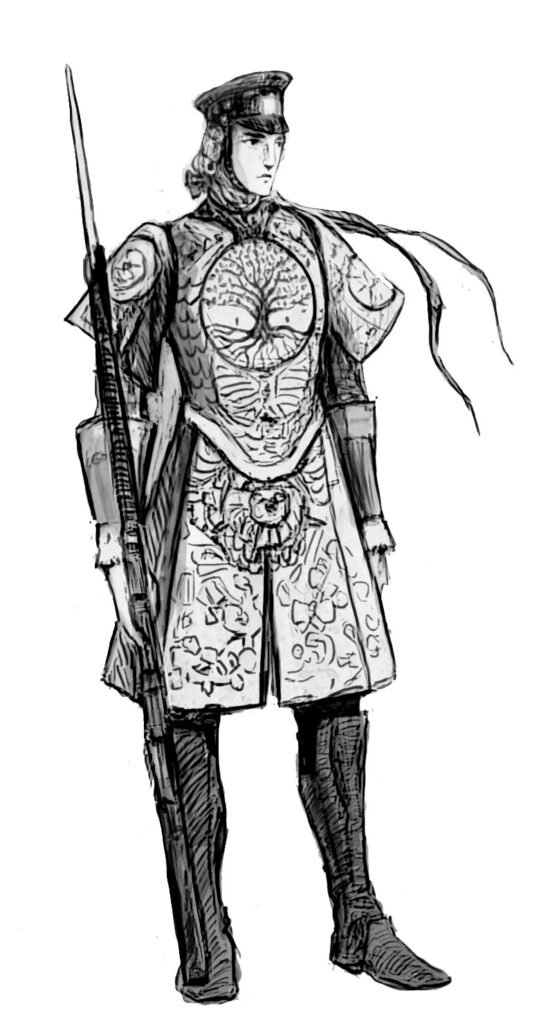
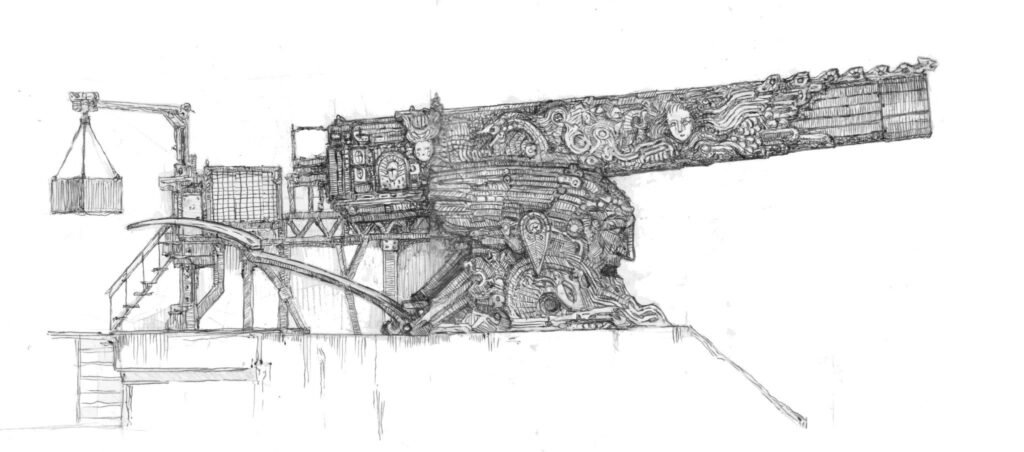
His guard also consisted of four time-signal guns, fired twice a day, at nine in the morning and nine at night. Those were the guns he was to blow up. What nonsense. And, as reinforcement, he had the Dragon-Slayer, the star of tourist postcards, at his disposal. Was he to blow that up too?
The fortress of Stavros itself had long forgotten its long-vanished heroic youth. For the past hundred years it had been a museum. Now there were guided tours and souvenir stalls on its walls, while the casemates, which remembered the confessions and screams of the Birch Crown’s interrogated enemies, housed a children’s haunted room and a waxworks museum.
The Stavrian tsar was a match for both his fortress and his guard: pampered, elegant, tall, corpulent, and entirely unwarlike. All his ancestors formed a succession of reckless rykar warriors in gilded picture frames. Even his father, Stavr XXXVI, who had ruled in peaceful times, had scarcely taken off his uniform except to sleep. His temperament was that of an ordinary swarm rykar: rough, explosive, and sensitive. He spent his entire youth on the Great Expanse, his maturity at parades and manoeuvres, and died at thirty-five when an armoured car ran him over during yet another exercise.
His heir, however, had turned out an entirely civilian person. Never in his life had the tsarevich worn uniforms, only the most expensive and comfortable loose-cut clothes. Balls, carnivals, roulette, cards, the finest varieties of inflammable waters, opera, food, racing, dogs, pigeons, horses, and women: that was an abridged list of his everyday interests. The people do not usually favour such rulers, but this good-natured jester was graced by luck and generosity.
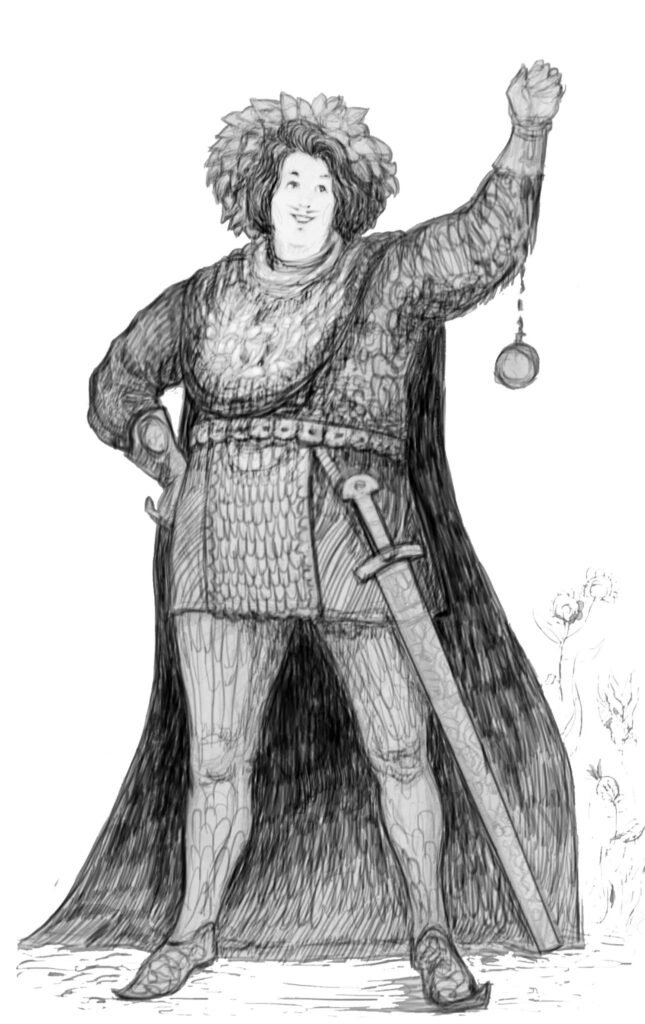
Every venture he embarked upon, even the most seemingly foolish—building the world’s tallest observation wheel, growing long rice in flooded districts, or reviving the ancient games of heroes with horse races and Guards’ all-round contests—everything that ought more probably to have brought losses and overtaxed the resources of this far from wealthy kingdom, proved a great success and brought a profit. The games drew visitors from across the empire; the long rice yielded abundant harvests and blossomed sunny pink in spring; and all of it looked splendid from the world’s tallest observation wheel.
The Wheel-Tsar’s favourite creation, however, was the church of Troyan the Justifier. There it hovered on its low rock, still scaffolded, still without domes, its delicate carving like transparent clothing over a white body. Inside, until yesterday evening, his favourite painter, Vorobyov-Angel, had been painting the walls. Outside, the church was a bride; inside, it was dark as a smoke-blackened bathhouse. Unfinished frescoes of holy matrons, apostles of fearlessness, and hawk-angels gazed from the walls with extraordinary dark faces, as though painted forty thousand years earlier, although the paint had not yet dried. How deeply one could repent beneath their gaze. And, to his shame, the tsar loved to repent.
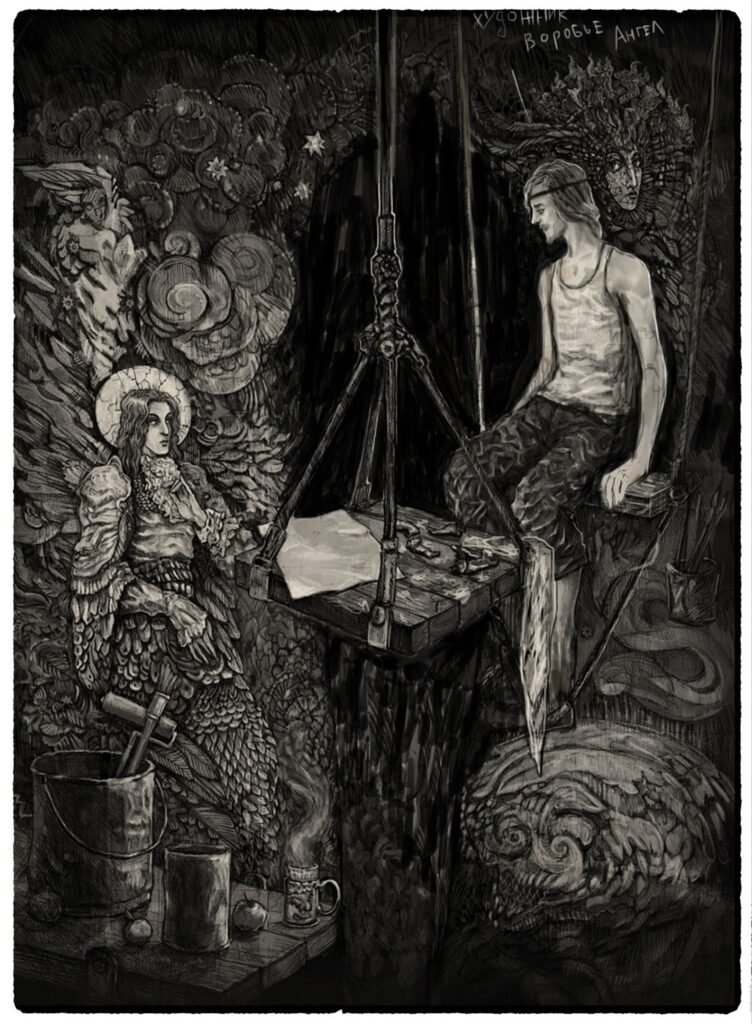
Together with Vorobyov he was planning another church. This one, conversely, would be black outside, like an evil witch’s tower, but white within and painted with the brightest images of dove-angels and basilisk brides. There they would marry people and sing the funeral rites of the good. Beautiful, beautiful plans. Could they really be doomed by a stupid war?
Naturally, the tsar had not slept today. Evacuation, panic, a useless council of war, a wretched dog’s dinner snatched on the run—all of it had weighed heavily upon his fat, impulsive body and light head. Before leaving the palace for the fortress, he had drifted off for a few minutes, and in that half-sleep it was as though he had been crucified. He woke with a sharp pain in his chest and the dull knowledge that everything was over. Something cruel, evil, and irreversible was coming, like a terrible mutilation, like the Beast-Turning. A happy bride had brushed against a table; the golden egg had begun to roll and was about to fall. Now everything would change, everything would grow far worse. What use would he be then, with all his passion for useless beauty and unwholesome merriment?
He seemed so unnecessary to himself. As a man stricken by grief is unwanted at a wedding, as a man filled with great joy is unwanted at a funeral, so he was unwanted in this evil time approaching. Yet that realisation brought him neither melancholy nor helplessness, as one might have expected of a man with so soft a face, such large eyes, such long lashes. On the contrary, his thin rykar blood suddenly began to seethe, and rage cooed in his plump crop.
What did it mean, then—blow things up, retreat, and leave his town to the enemy? No. He would not be useless. He would stay here, on the fortress’s upper wing. Today he would command ‘Fire!’ until he was torn apart. He had an heir; the tsarevich took after his grandfather. Let him know that his father was no jester, no wheel, no great fat blot in the ancestral gallery of heroes, but a hero too, as good as any of them. The idea woke him like an electric shock. That evening he had sent his family and court out of Stavrossa. After the council of war, he himself was to take the fortress’s final time-signal salute at nine in the morning, then immediately get the hell out with his guard. Instead, he decided to do something rather different…
The Wheel-Tsar hurried to the fortress, climbed five steep staircases to the very top, and, suffering from chafed thighs and breathless with excitement, shouted to his guards in a cracking voice that he was going nowhere. Unless at least three brave men stayed with him, he would load and fire at the enemy himself until he was blown to pieces.
The captain of his guard, the most thoroughbred beauty of them all, with curled, wheat-coloured moustaches, looked no more like a man ready to die soon than his tsar did. But the speech, hysterical as it was, stirred him deeply too. In confused and somewhat lengthy terms, he informed the ranks of picked beauties that if any of them found the tsar’s example insufficient reason to stay, he himself would stay as well. A few men shifted uneasily in the ranks, but none had the courage to leave. The beautiful are always brave.
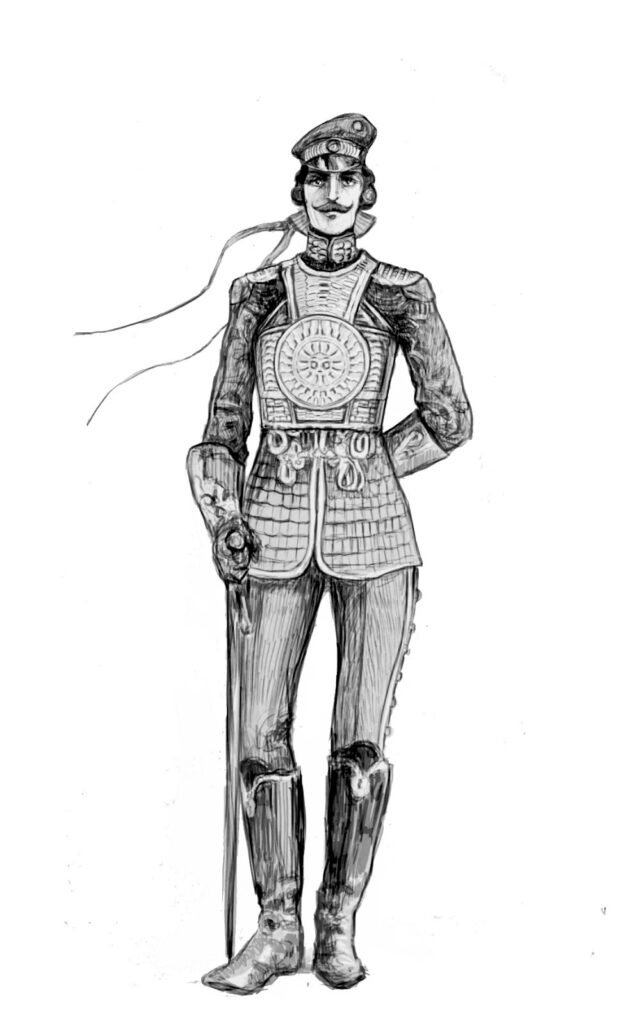
Now the tsar feared only one thing: that his delicate nerves, trained solely by gambling, would fail him. He smiled crookedly, remembering how his wife, whom he would never see again, had given him a final dry kiss and said the cook would travel with them in the car, so that whatever happened he would have Yavan ribs in guelder-rose sauce for lunch. What a fine opinion she had of him. The tsar chuckled. What a face she would pull when she learned that by lunchtime he himself had roasted like Yavan ribs. A second later he remembered the crown of his son’s head beneath his palm and began coughing thickly to keep from sobbing.
For the second time that morning, Goryanov, curator of the museum-fortress, ran up to him. Once again he rattled on about preparing the Dragon-Slayer to fire: they were going to blow it up anyway. The tsar was astonished. What nonsense. The Dragon-Slayer was a monument, four hundred years old; it had never fired in its life. The captain of the guard came over and said it would burst if they fired it.
‘No, it won’t!’ the curator shouted, and the two of them fell into an argument. The tsar cut them short.
‘Quiet!’
He told them to leave it alone. One day the city would be retaken, and perhaps the Dragon-Slayer would still be intact. Then it could delight their ancestors yet. Their descendants. Behind him stood a postcard kiosk; every other postcard showed the Dragon-Slayer. The cheapest cost a kopeck, the large embossed ones two crowns. The idea displeased the tsar for another reason too: he was a ceremonial figure himself, his army a set of model-soldier mannequins, his artillery a battery of time-signal guns. All he needed was to die fighting with a historical attraction. His lifetime nickname was bad enough—the Wheel-Tsar—without some insulting final epithet sticking to him. He began turning suitable possibilities over in his head: the puppet tsar, the nutcracker…
On the other hand, come to think of it, trying to fire the Dragon-Slayer had a beauty of its own. What mattered was that he had not run away. No one would dare laugh at him. Yes, a toy guard; yes, a museum cannon. But the real army had left the town, and he had not…
Holy Spirits, the armada was already so close. The tsar felt like a straw-stuffed scarecrow: everything inside him prickled, his legs barely held him, his thoughts tangled. He seemed to have only minutes left to live, yet the museum director would not leave him alone. Just three soldiers, then; at least two. He could not work the loading crane by himself. Still he asked and asked, such a small, undistinguished man. The tsar disliked being near small, ugly people. He pitied them terribly and felt that his royal magnificence offended them without his meaning to. He was comfortable among people who were large, beautiful, or at least very talented. Capriciously, he waved a hand to be left in peace.
Meanwhile the first sarcophagus had entered the Narrow Throat like poison, followed by three more humpbacked giant executioners and a procession of ironclads. Here, on the left bank, began the outskirts of Stavrossa. The tsar could not grasp that he was seeing enemy ships in waking life against this view so familiar as to be invisible. Tin and tiled roofs, telegraph poles, poplars, a granary, his beloved church, the old river port—and past them, truly, not in a dream, crawled these creatures, like swollen ticks full of fire and agonising death. Closer and closer.
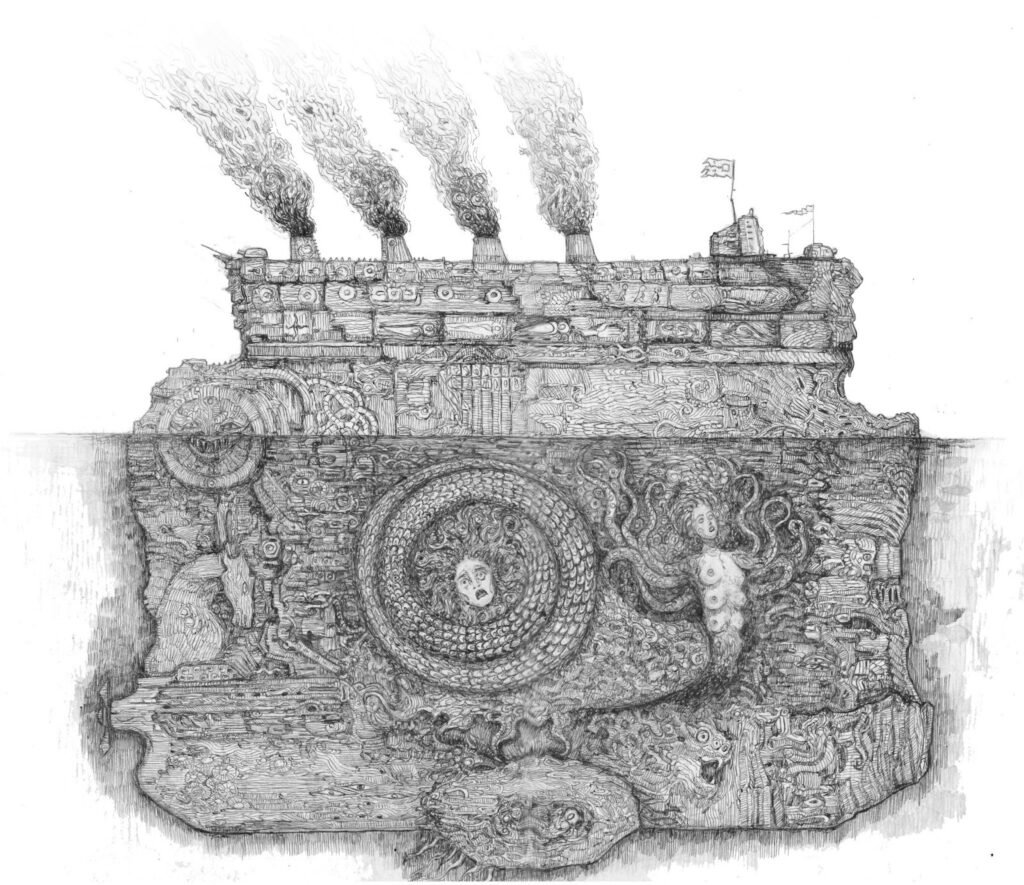
The captain of the guard had worked himself up splendidly and was commanding the time-signal battery, training the guns on the leading sarcophagus. Was everyone serious about this? He wondered: if he now suggested that they all clear out, would they still have time to escape, instead of dying from one minute to the next? His handsome guards were shifting about beside the guns too. Poor boys. They wanted to live. Only the captain stood like a statue. Fool. But what could be done? How horrible and vile those sarcophagi were. It was one minute to nine. In a minute they would fire, and he would order everyone to run. Surely that would be enough of a heroic deed? Or perhaps they need not fire at all. It seemed entirely useless.
Before the tsar could settle into his cowardly intentions, the first sarcophagus suddenly fired a thermite mortar for no reason whatsoever. Casually, needlessly, in passing—and the tsar’s beloved church, his white beauty, burst into flame from head to foot, as though drenched in burning fuel oil.
The tsar gave a weak cry and fell silent. For a second he said nothing. Then, losing every shred of self-command, he began to scream, scream, and rasp, spraying spittle and enormous tears. He showered the sarcophagi with the most terrible curses and filthy threats, demanded that fire be opened at once, that holes be punched through those stinking coffins and that they be sent to the bottom.
The time-signal guns pricked their mosquito stings towards the enormous monsters and fired a salvo with clockwork precision. Puff, puff, puff-puff. The only result was that the leading sarcophagus gave a displeased giant grumble and turned its low-browed forward turret towards the fortress.
A salvo. A humming. A ball of fire blotted out the whole left half of the tsar’s world with a hot yellow stain and made him drink his fill of sour heat. The tsar choked.
Another shot. The fortress’s stone slabs shuddered beneath his feet. A heavy, solid force lifted him roughly. The tsar felt himself flying, felt something crunch behind his back and scatter into splinters and whirlwinds of scenic postcards. Then an impact, warmth at the back of his head, and the pleasant sensation of being a slice of properly made cherry pie whose precious ruby filling was flowing out onto a porcelain plate.
The tsar came round in choking gunpowder smoke, coughing. He carefully felt his body, expecting his trembling fingers to sink into blood or flesh, but everything was dry and seemingly intact. Only when he touched the back of his head did he feel something sticky. Besides, he seemed unable to hear.
‘Hey!’ he shouted, and did not hear himself. He swallowed, growled; something popped in his ears, as though a little window in his head had opened, and muffled cries reached him.
In his poor, battered head the tsar pictured his guards torn apart and burnt—the boys he had destroyed for the sake of his own stupid pride. Never mind. One more second, one more shot, everything would flood with heat, and after a little writhing he would give his soul to God. Now. Any moment. But nothing happened. Only the cries grew louder, joined by fresh screams. Together with the sarcophagus’s roaring they fused into an oppressive, lunatic howl, and then into a sort of human barking. What the devil was happening out there? A madhouse! Irritably, the tsar wriggled like a beetle on its back, somehow got onto all fours, crawled to the parapet, and peered over.
Below, on the gun terrace, several guards lay wounded. The rest were yelling and jumping like wild apes. Ahead, across the Narrow Throat, stood the first sarcophagus, nearest the astonished spectator. Its side had been ripped open. Flame raged behind the mangled armour, and smoke thick as rubber clambered out in a black deformity. Here and there across the upper deck, hissing pillars of flame blew out hatches and pieces of plating and launched them high, high into the blue sky.
Something monstrous was happening inside the accursed ship. It hummed and shook all over like a living beast dying with an incendiary flare shot into its belly. ‘The Dragon-Slayer!’ cried the tsar’s heart. He turned, expecting to see the cannon destroyed, but it was intact. The shot had merely blown off all its applied carving. The fragments had killed the museum director, yet even in death he had frozen in a jubilant pose.
The second sarcophagus was bearing down on the first one’s stern. With a gigantic groan, it slowed and veered away, trying to avoid a collision. Its side scraping, it passed its burning companion, strayed beyond the dotted line of silver buoys marking the channel, and ran aground with a heavy, abrupt blow.
The first sarcophagus burned with the fire of its own incendiary charges, like a gigantic phosphorus candle, and could hardly fail to share its warmth with its companion. Its hissing flame spread to the second sarcophagus, and soon both blazed in a single bluish fire.
The heat reached the tsar as a gentle warmth and the delicate fragrance of a burning enemy. He could not tear his eyes away. He wanted to sit down right here in his favourite armchair, warm his outstretched fingers, and watch and watch. Hatches blew out of the second sarcophagus’s upper deck and sides too, releasing smoke, steam, and something like distant, exultant laughter.
‘Hot enough for you? Hot?’ the tsar roared.
Sailors in yellow overalls began spilling into the water. Launches and boats were lowered from the stern compartments.
‘Shoot them!’ the tsar bellowed, shaking his fists and his fat crop. Now the time-signal guns proved useful after all. Loaded with grapeshot, they pounded the launches and boats to splinters.
‘Stay where you are! Nobody leaves! Fire, fire!’ the tsar shouted, clutching his heart with both hands.
Never again was anyone who took part in that slaughter as happy as in those minutes. Never again in their lives did any of them do anything so good, so pleasant, and so just.
That day went down in history as the Coffin-Breaking. The Dragon-Slayer fired twice more: it finished off the second sarcophagus and missed the third. The Solo assessed the situation in time, and the two surviving sarcophagi managed to retreat. That evening the remnants of the enemy armada left the Stavrian Arm and set course for Ponurt.
Next episode https://bezdezna.com/en/book/chapter-4-1/